
Hartley County Court Records After Arrest
A jail arrest creates booking information first. A court record begins when a prosecutor or court filing turns the incident into a case. For Hartley County court records after a jail arrest, that means checking the County Clerk, District Clerk, and iDocket after the case is filed. Jail-dispatch can answer current custody questions, but the clerk and court portal are the better source for filed charge status, case number, court dates, and disposition.
The research found no online Dallam-Hartley jail roster, so custody and court searches are especially separate here. Use Hartley County jail inmate records for the jail-side fallback chain and Hartley County jail mugshots for booking-photo request limits. This page focuses on court records after an arrest: complaint, information, indictment, bond orders, warrants, charge changes, and final outcomes.
Find Hartley County Court Records
Hartley County Clerk and District Clerk pages both point users to iDocket for online case information. A Hartley County and District Court press release said county and district court case information became available online through iDocket on January 2, 2020. The county-filed iDocket tables also showed Hartley County court activity in inspected search results, though the public entry point may require account or portal access for full search details.
- Open iDocket from the Hartley County Clerk or District Clerk link.
- Select Hartley County and the correct court if the portal asks for county or court.
- Search by defendant name or case number when available.
- Open the case and compare the filed charge list with the arrest or booking information.
- Contact the County Clerk or District Clerk if the portal does not show the case or if certified copies are needed.
Texas DPS Computerized Criminal History is a separate statewide criminal-history tool. It should not be treated as a free county docket or a live arrest tracker.
Hartley Court Search Fields
The exact iDocket search fields were not fully visible without entering the portal, so the safe field inventory is partial. Hartley official pages confirm the iDocket link and the existence of County Court and District Court case access, but they do not document a complete public field table.
| Field | Type | Required | Notes |
|---|---|---|---|
| iDocket account or sign-in | Portal access | May be required | Public entry page can lead to account-gated search. |
| County | Dropdown or list | Likely | Hartley County appears in iDocket county/court tables. |
| Court | Dropdown or list | Likely | Hartley County Court and Hartley District Court are referenced by county pages. |
| Name or case number | Text | Likely | Use clerk contact if no result appears. |
Charges Filed After Arrest
After arrest and booking, a magistrate appearance follows under Texas Code of Criminal Procedure Article 15.17. The prosecutor then reviews reports and decides what to file. Felony matters in Hartley County involve the 69th Judicial District Attorney. Misdemeanor or county-level matters may involve the Hartley County Attorney. The filed court charge may match the jail booking charge, but it can also be amended, reduced, added, or dismissed.
| Document | Who Uses It | What It Means |
|---|---|---|
| Complaint | Officer, complainant, or prosecutor path | A sworn charging statement that can begin a criminal case. |
| Information | Prosecutor | A formal prosecutor-filed charge, often used for misdemeanors. |
| Indictment | Grand jury | A grand-jury charge, commonly tied to felony prosecution. |
Hartley Charge Status
Court records after an arrest should be read by status, not just by the first charge name. A case can remain pending, be amended, be reduced to a different level, be dismissed, lead to deferred adjudication, or end in a conviction. The jail booking charge is an intake record. The court charge controls court dates, pleadings, disposition, and conviction status.
| Status | What It Means |
|---|---|
| Pending | The charge is filed and not yet finally resolved. |
| Amended or reduced | The prosecutor or court record changed the charge level or wording. |
| Dismissed | The charge was dropped by the court or prosecution path. |
| Deferred adjudication | A Texas disposition that may avoid a final conviction if conditions are completed. |
| Convicted | A plea or verdict resulted in a conviction and sentence. |
Bond After Hartley Arrest
Texas bail is governed by Code of Criminal Procedure Chapter 17. For a Hartley County arrest, bond information may involve jail-dispatch, a magistrate, County Court, District Court, and the prosecutor depending on the charge level. Always confirm custody and any holds with jail-dispatch before assuming that a posted bond will lead to release.
| Bond Type | How It Works |
|---|---|
| Cash bond | The full cash amount is posted as directed by the court or jail. |
| Surety bond | A licensed bail bond company posts bond under Texas rules. |
| Personal or PR bond | Release is based on a promise to appear and court conditions. |
| No-bond hold | Release is blocked by court order, warrant, parole hold, detainer, or another agency hold. |
Warrants and Court Records
No official Hartley County active warrant search or sheriff warrant list was located. A warrant check therefore uses a fallback path. Call the Hartley County Sheriff's Office for sheriff warrant questions, call Dallam-Hartley jail-dispatch if the person may already be booked, and contact the issuing court for bench warrants or capias matters tied to a filed case. iDocket can help when a case already exists.
- Arrest warrant
- A court order based on probable cause to arrest.
- Bench warrant or capias
- A court-issued warrant, often after failure to appear.
- Parole or blue warrant
- A parole hold that can block normal bond release.
- Detainer
- A request from another agency that may keep a person in custody.
Charges vs Convictions
A charge is an accusation in a court record. A conviction is the result of a plea, verdict, or other final court action that counts as a conviction under the law. Hartley County court records after an arrest may show both charge history and final disposition, so read the latest entry before drawing conclusions.
| Charge | Conviction | |
|---|---|---|
| Stage | Filed accusation after arrest or investigation. | Final result after plea, verdict, or judgment. |
| Proof level | Based on charging standards and probable cause. | Based on conviction requirements or plea. |
| Record impact | May remain public even if later dismissed unless cleared. | May affect sentencing, supervision, and criminal history. |
Sealed and Expunged Records
Texas Code of Criminal Procedure Chapter 55 governs expunction, which can affect access to qualifying arrest records after certain outcomes. Nondisclosure or sealing can limit public access without the same effect as expunction. Eligibility is fact-specific, so a court record after an arrest should not be assumed cleared just because a charge was dismissed.
| Sealed or Nondisclosed | Expunged | |
|---|---|---|
| Public view | Public access is limited. | Eligible records are removed from ordinary public access. |
| Legal effect | Record still exists for some permitted uses. | Record may be treated as erased under the expunction order. |
| Best source | Court order and clerk record. | Expunction order under Chapter 55. |
Hartley Court Contacts
Hartley County court records after a jail arrest may involve more than one office. The County Clerk handles County Court access. The District Clerk handles District Court access. The 69th Judicial District Attorney handles felony prosecution, while the Hartley County Attorney is relevant for misdemeanor, county-level, and victim-assistance matters.
Hartley County Clerk
PO Box 189
Channing, TX 79018
(806) 235-3582
Hartley District Clerk
900 Main St.
Channing, TX 79018
(806) 235-3442
69th Judicial District Attorney
715 Dumas Avenue
Dumas, TX 79029
(806) 935-5654
Hartley Court Record Sources
The Hartley County Clerk page identifies the clerk contact and points users to iDocket for court case access.
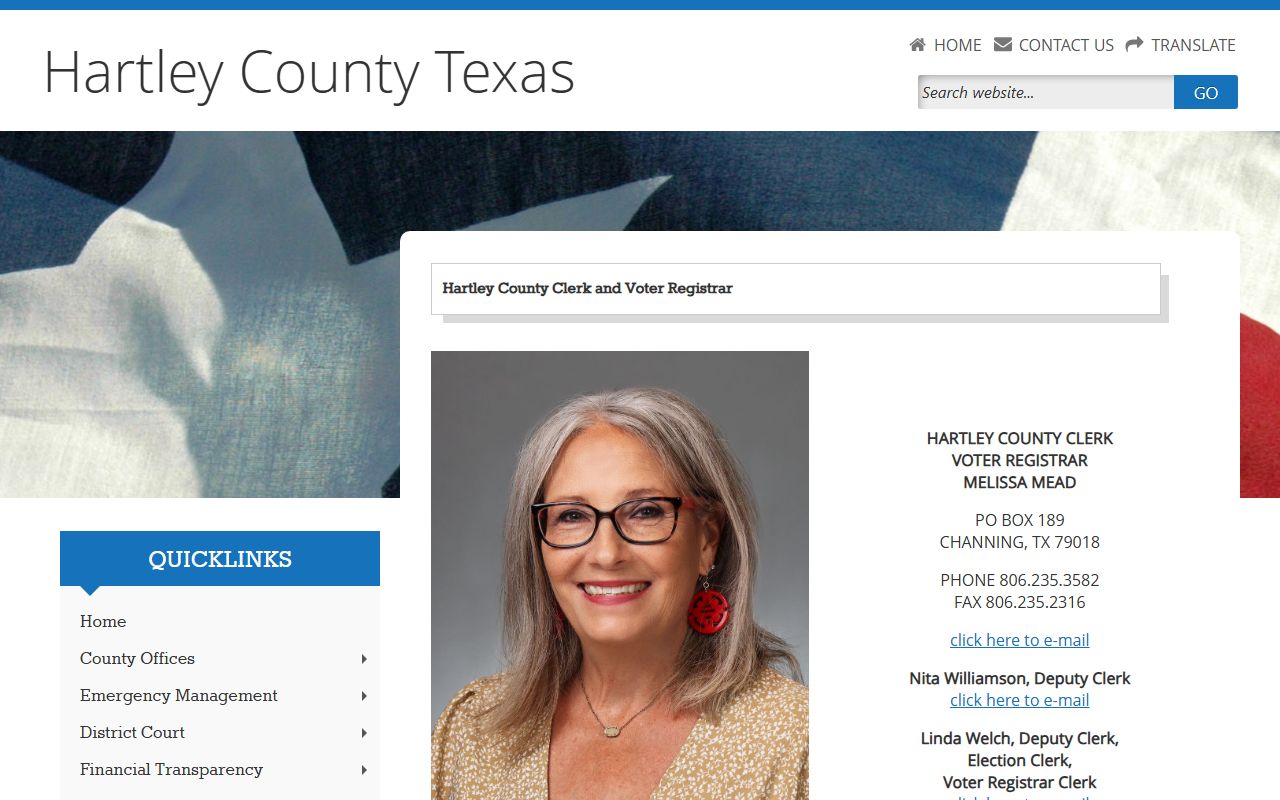
Clerk records are the court side of the arrest-to-charge pathway, separate from jail-dispatch custody records.
The iDocket public court-information portal is the online court case source linked by Hartley County.

If the portal does not show a case, the clerk office is the better place to confirm whether charges have been filed.
FCRA and Public Records
Public court records after an arrest are not the same as a consumer background report. Employers, landlords, insurers, lenders, and other covered users must follow the Fair Credit Reporting Act and any other law that applies to their decision. Casual review of a court docket should not be used as a substitute for a lawful background-check process.
Important: This private reference site is not a consumer reporting agency and is not for employment, credit, insurance, tenant, or housing screening.